Category
Workflow & Process
Publish Date
24 May 2025
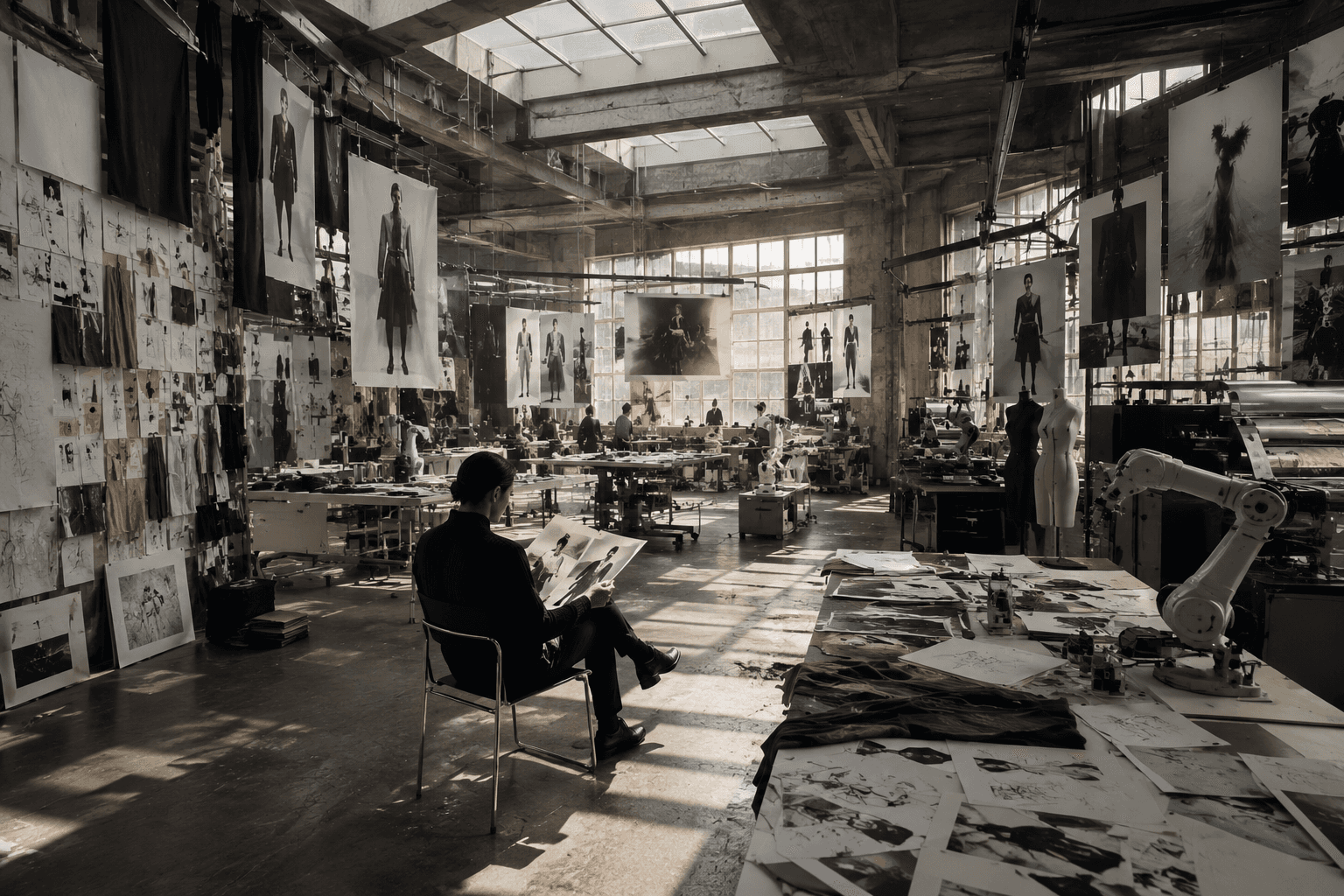
Every growing D2C brand faces the same content problem — product volume outpaces production capacity. Here's what that costs and how it gets fixed.
The gap between what a growing D2C brand needs in visual content and what it can actually produce is one of the most expensive and least discussed problems in E-commerce.
Not because brands don't know it exists — they feel it every week. But because the gap has been accepted as a fixed reality. A cost of doing business at scale. An operational constraint with no clean solution.
The numbers make the problem visible:
A mid-size fashion brand launching 40–60 new SKUs per month needs a minimum of 3–5 images per SKU — clean product, lifestyle, detail, and platform variants
That's 120–300 images per month before campaign content, social assets, or paid ad creatives are considered
Traditional product photography costs ₹500–2,000 per image including studio, model, and post-production
At that rate, visual content for a single month of new SKUs costs ₹60,000–₹6,00,000 — before a single campaign asset is made
Most brands are spending a fraction of that — and the gap shows in their content
What Fills The Gap
Compromise.
Products that never get properly photographed because the shoot didn't get to them. Listings that go live with weak visuals because there was no time to redo them. Campaign ideas that never happen because production can't move fast enough to match the launch calendar. Social content that looks rushed — because it was.
The compromise has a measurable cost:
Products with 3+ high-quality images convert at up to 58% higher rates than those with a single image on major ecommerce platforms
Lifestyle images outperform white-background product images by an average of 40% in Meta ad CTR for fashion and jewellery categories
Brands that refresh creative weekly see up to 3x lower ad fatigue compared to those running the same creative for a month
The gap between what's needed and what gets made is not a creative problem. It is a production infrastructure problem. And it has been solved.
Why The Shoot Day Model Was Always Broken For Scale
The traditional shoot day was designed for a different era of retail. Seasonal collections. A finite number of SKUs. A catalog that updated twice a year.
D2C brands don't operate that way. They drop new products weekly. They test new styles constantly. They respond to trends in real time. The shoot day model was never built for this — it was inherited from a slower industry and never redesigned for the pace of digital commerce.
The result is a structural mismatch:
Shoot capacity: Fixed. One day produces a finite number of assets.
SKU volume: Growing. Every quarter, more products need content.
Platform requirements: Expanding. Every new channel has different specs, formats, and content expectations.
Campaign frequency: Increasing. Brands that used to run one campaign a quarter now need content weekly.
Something had to change. The shoot day didn't. Everything else did.
What The Fix Actually Looks Like
AI-directed production doesn't fix the shoot day problem by making shoot days faster. It fixes it by making the shoot day optional for most of what a brand needs.
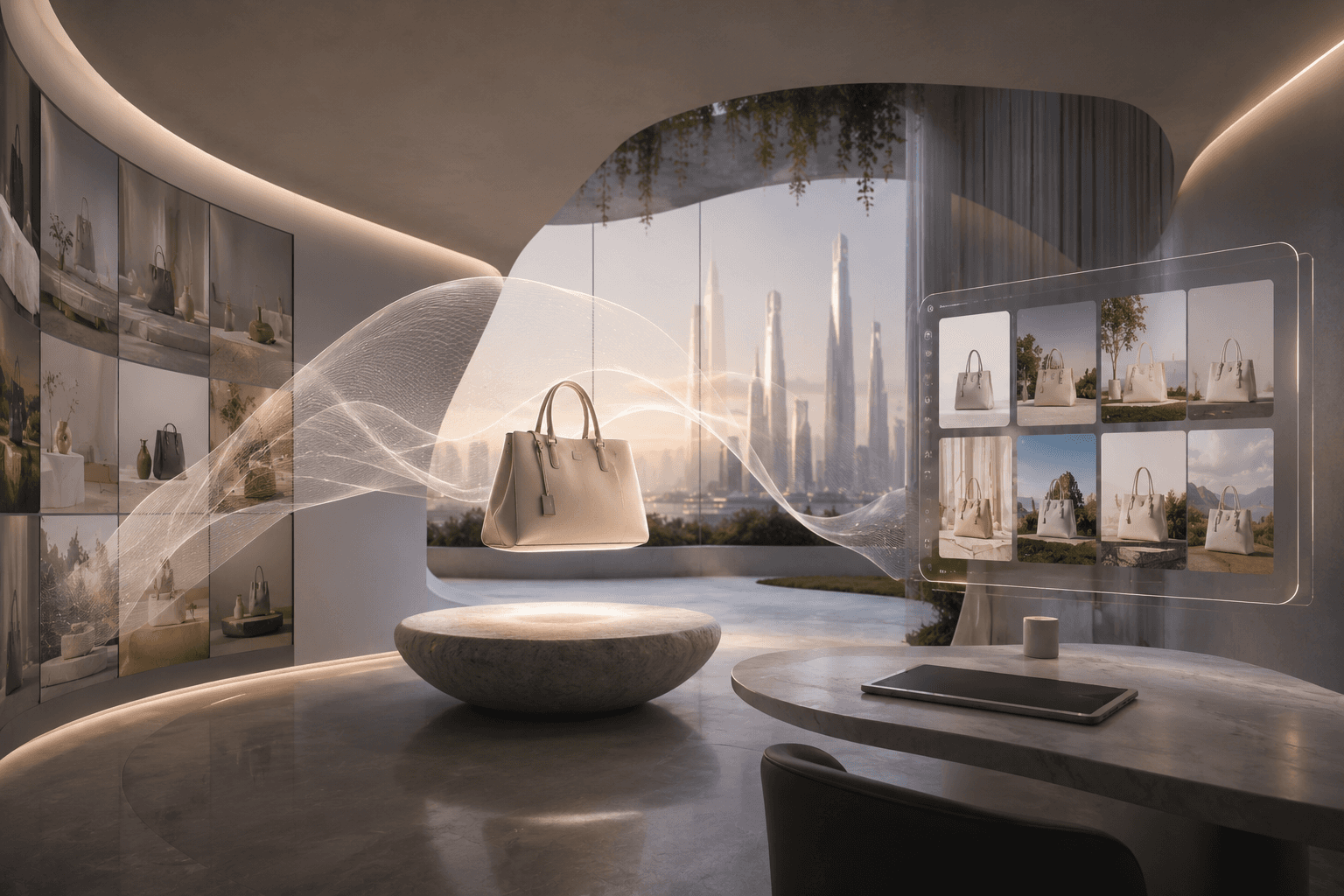
A product image on a clean background. The same product in a lifestyle context. The same product in twelve different environments for twelve different audience segments. Done — without a location, a crew, or a three-week wait.
What a brand provides: a clean product image and a brief.
What comes back: a complete visual suite — every SKU covered, every platform formatted, every week — not every quarter.
The numbers look different when the infrastructure changes:
AI-directed product imagery: $3–12 per image vs ₹500–2,000 for traditional
Turnaround: 48–72 hours vs 2–3 weeks
Volume capacity: 100+ SKUs per month vs the physical limit of a shoot day
Consistency: Every image produced within the same brand visual system — no variance between batches
What Still Requires A Physical Shoot
Not everything. But some things — hero campaign imagery, talent and celebrity integration, specific material textures that require physical light — still benefit from a physical shoot element.
The answer for brands that need both is a hybrid model. A controlled shoot that captures the physical elements AI cannot fully replicate — the texture of a fabric, the genuine movement of a model, the specific quality of natural light on a particular material. AI then extends that footage into unlimited environments, contexts, and formats.
One shoot day. Unlimited output.
That is the production model brands operating at scale should be running.
Final thought:
100 SKUs doesn't have to mean one overwhelmed shoot day anymore. It just means one well-directed brief.
This is the exact operational bottleneck we eliminate.
At DRFT, we designed our AI ecommerce content production engine specifically for high-growth D2C, fashion, and lifestyle brands that have outgrown the physical limits of the traditional shoot day.
Through our streamlined AI product photography frameworks, we transform a single asset brief into a comprehensive, multi-environment visual content system for your entire catalog in just 48 to 72 hours.
Whether you need clean ecommerce listings across 100+ SKUs or high-converting lifestyle variations for your paid ad channels, our human-directed process ensures strict brand accuracy and unmatched cost efficiency.
Stop forcing a modern retail strategy into an outdated production model.
Step away from the logistics of the shoot day.
Embrace pure creative intelligence, and let your content move at the true speed of your business.
madebydrft.com