Category
Case Studies
Publish Date
04 June 2025
We believe great design is more than visuals—it’s about creating meaningful impact. When designers think like strategists, they bridge creativity with business goals, ensuring design decisions drive growth and long-term success.
The Industry Built Around A Myth
The assumption that fast and good are opposites didn't come from nowhere. It came from the physical constraints of traditional production.
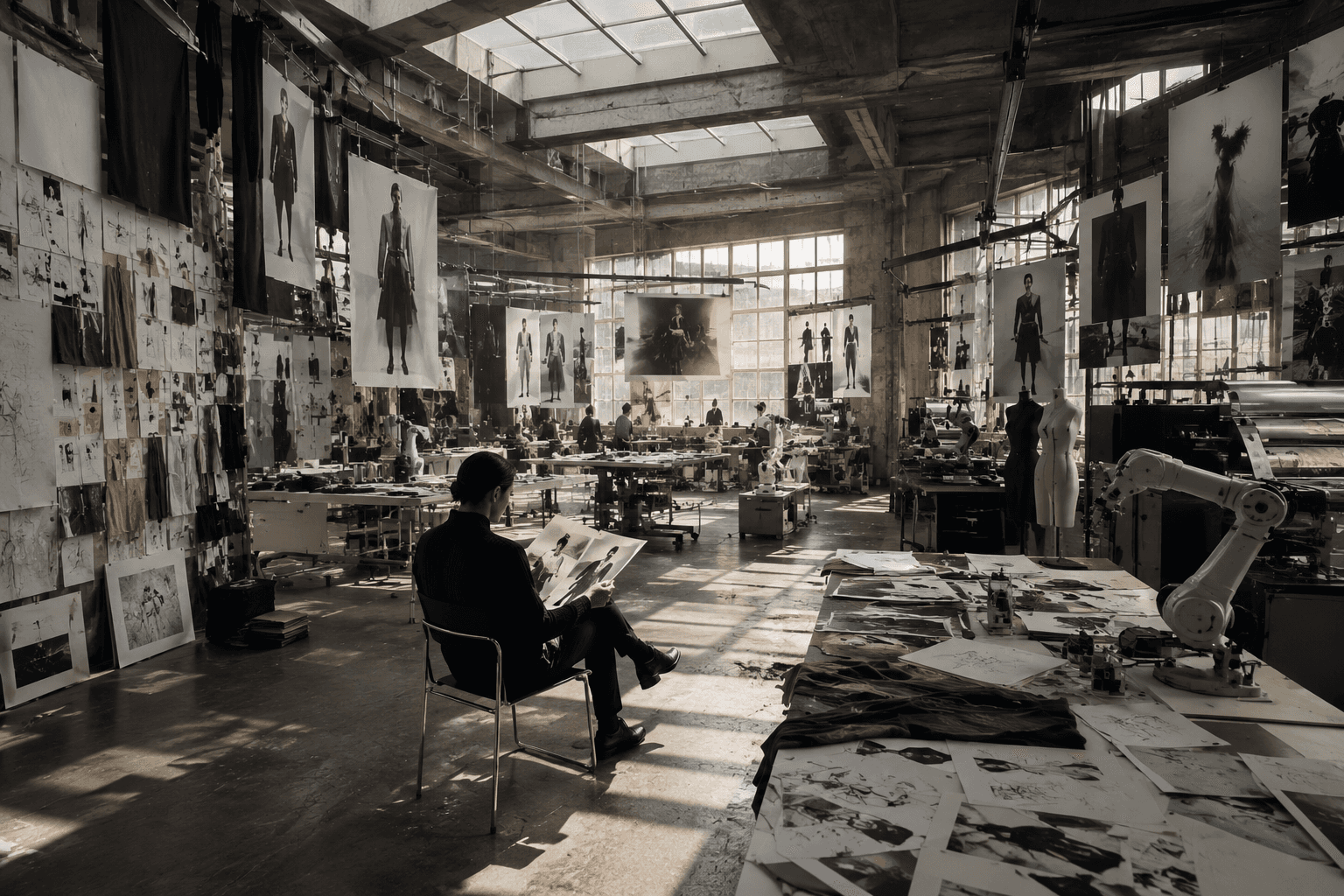
A location shoot requires scheduling, logistics, travel, crew, talent, and equipment. A studio day costs between ₹2–8 lakhs depending on scale. Post-production adds another 2–3 weeks. A single 60-second brand film took an average of 13 days from brief to delivery — and that was considered efficient.
Inside those constraints, slow became a proxy for quality. If it took a long time, it must have been done properly. If it was fast, corners were cut.
The constraints are gone. The proxy needs to go with them.
What Actually Changed
Between 2023 and 2026, AI production tools crossed a quality threshold that made them commercially viable for brand-grade output. The numbers are not marginal:
91% reduction in production costs for comparable visual output
10x increase in content volume from the same team size
72-hour delivery from brief to first output — for work that previously took weeks
AI video platform adoption grew 127% year-on-year in enterprise marketing budgets in 2025
This is not about replacing craft with shortcuts. It is about removing the parts of the production process that were never about quality to begin with.
What Was Never About Quality
Every production has two layers. The creative layer — the idea, the direction, the decision about what the brand should look and feel like and why. And the logistical layer — the scheduling, the location scouting, the three rounds of amends because the shot wasn't quite right on the day.
The logistical layer was always a tax on the creative layer. It consumed time, budget, and energy that could have gone into making the work better. Teams spent weeks solving problems that had nothing to do with the quality of the output.
AI removed the logistical tax.
What remains is the actual creative work:
The brief. What needs to be communicated, to whom, and how.
The direction. Which visual world serves this brand and this product.
The judgment. Which output is right and which isn't — and why.
That part still takes craft. It always will.
What Brands That Understand This Are Doing Differently
The brands moving fastest in 2026 are not the ones with the biggest production budgets. They are the ones that stopped confusing production complexity with creative quality.
They are briefing more frequently. Testing more visual directions. Refreshing content at the pace their audience consumes it — which is weekly, not quarterly. And they are doing it without the three-week production cycle that used to make that impossible.
The brands still operating on the old assumption — that a campaign requires a shoot day, a crew, and a six-week post-production schedule — are not producing better work. They are just producing slower work.
The Only Thing That Still Takes Time
Creative judgment. Brand understanding. The ability to look at a hundred generated options and know which three are worth developing further.
That cannot be automated. It cannot be rushed. It is the one part of production where speed is genuinely the enemy of quality.
Everything else — the logistics, the formatting, the platform adaptation, the volume — that is now a solved problem.
Fast and good was always possible. Now there is no excuse for settling for anything less.
Final thought:
The production ceiling didn't lower the bar. It raised it — for everyone who was hiding behind the process.
We built DRFT to sit firmly on the other side of that ceiling.
We didn't create an AI creative studio to play by the rules of an outdated, slow-moving industry; we created it to break them.
By stripping away the legacy logistics that used to drain budgets and stall momentum, our AI production studio for D2C, fashion, and lifestyle brands delivers high-impact AI campaign visuals in a 48 to 72-hour sprint window.
We provide the speed of generative platforms without ever compromising on the rigorous human creative direction required to build an authoritative brand identity.
You no longer have to choose between velocity and premium execution.
With DRFT, campaign-grade volume is standard.
Elite creative judgment is the baseline.
@madebydrft.com